The Staten Island Expressway carries heavy commercial truck traffic through a narrow corridor between the Goethals Bridge and the Verrazano-Narrows. For commuters who drive it daily alongside 18-wheelers, box trucks, and tankers, that is not an abstract risk.
A truck accident on the SIE does not produce a standard passenger vehicle claim. The liability picture is more complex, the coverage more extensive, and the investigation needs records that most commuters do not know exist. Call us at (212) 977-7033 before giving any statement to the trucking company's insurer.
Key Takeaways:
- Commercial truck accidents on the Staten Island Expressway involve a more complex liability picture than passenger vehicle accidents, often including the truck driver, the trucking company, the vehicle owner, and the cargo loader as potential defendants.
- Federal Motor Carrier Safety Administration regulations impose specific safety obligations on commercial carriers operating on routes like the SIE, and a violation can support a negligence claim against the carrier.
- Federal rules set minimum liability coverage for interstate commercial carriers well above personal auto minimums, which affects both the available coverage pool and the litigation strategy in SIE truck accident claims.
- Electronic logging devices and onboard GPS systems in commercial trucks generate data that can establish driver fatigue, speeding, and route deviation in the moments before an accident, but that data must be preserved quickly.
- The size and weight differential between a commercial truck and a passenger vehicle shapes both the liability analysis and the damages picture in an SIE claim.
Why Does the SIE Create Specific Truck Accident Patterns?
What Makes the Staten Island Expressway Different From Other NYC Routes
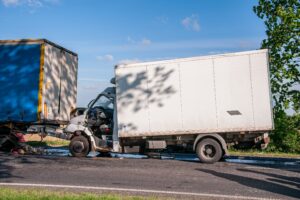
The SIE functions as a commercial gateway between New Jersey's distribution infrastructure and the rest of New York City.
Trucks crossing the Goethals Bridge from the warehouse corridors of Elizabeth and Carteret funnel onto I-278 and through Staten Island before reaching the Verrazano-Narrows Bridge to Brooklyn. That volume on a road designed for a different era of vehicle size creates specific geometric hazards.
The elevated sections near the Staten Island Mall corridor have lanes that feel narrow when a loaded 18-wheeler occupies the adjacent lane. The merge points near the Slosson Avenue and Richmond Avenue interchanges create acceleration conflicts between merging passenger vehicles and trucks that cannot slow quickly.
Wet weather on the elevated sections lengthens braking distances for heavy commercial vehicles well beyond what passenger car drivers expect.
Passenger vehicle crashes on the SIE involving commercial trucks concentrate at those merge points and on the elevated sections, which is where the geometry gives a car driver the least room to react.
How Truck Driver Fatigue Contributes to SIE Accidents
Commercial truck drivers operating on routes that include the SIE are subject to the Federal Motor Carrier Safety Administration's hours of service regulations, 49 CFR 395, , which cap how long a driver may be behind the wheel. Those regulations limit driving hours and require rest periods specifically because driver fatigue is one of the causes of truck accidents.
A driver who has been on the road for 10 hours before reaching the SIE during evening rush hour presents a specific fatigue risk on a road where commuter traffic is dense, and merge conflicts are frequent.
Electronic logging devices, which commercial carriers are required to maintain, record driving hours and rest periods in real time. That data is among the first evidence we pursue, because it establishes the driver's hours in the period before the collision.
Who Is Liable in a Staten Island Expressway Truck Accident?
How Commercial Carrier Liability Differs From Personal Auto Liability
A passenger vehicle accident claim typically involves one insured driver and one insurance policy.
A commercial truck accident on the SIE can involve the driver, the trucking company that employs or contracts them, the company that owns the truck if that is a different entity, the company that loaded the cargo, and, in some cases, the broker who arranged the shipment.
Federal Motor Carrier Safety Administration regulations under 49 CFR 390 impose safety obligations on commercial carriers operating in interstate commerce, including maintenance requirements, driver qualification standards, and vehicle inspection protocols. A violation by the carrier or the driver can support a negligence claim against the corporate entity, not just the individual driver, highlighting the importance of truck driver safety awareness.
What New York Vehicle and Traffic Law Section 388 Adds
New York Vehicle and Traffic Law Section 388 imposes liability on vehicle owners for injuries caused by anyone operating their vehicle with permission. In commercial trucking cases where the truck owner and the carrier are different entities, Section 388 reaches the vehicle owner directly regardless of the employment classification of the driver.
That provision is particularly relevant in SIE truck accident cases involving leased vehicles, owner-operator arrangements, and broker-carrier relationships where the chain of ownership and operational control is not immediately obvious. We investigate the full ownership and contractual structure of the vehicle's operation before making any determination about which parties to name in the claim.
How Cargo Loading Liability Fits Into SIE Accident Cases
Some commercial truck accidents on the Staten Island Expressway involve cargo shifts, load imbalances, or unsecured materials that affect the vehicle's handling and contribute to the accident. The company responsible for loading the cargo carries independent liability when improper loading caused or contributed to the crash.
In jackknife accidents on the SIE's elevated sections, cargo distribution can be a factor. An improperly balanced load shifts the weight distribution of the trailer during braking or evasive maneuvers, producing handling characteristics the driver cannot compensate for.
Establishing cargo loading liability requires obtaining the bills of lading, which are the shipping documents listing what was loaded and by whom, along with the loading records and weight distribution documentation.
What the SIE Truck Accident Investigation Looks Like
What Electronic Evidence Gets Preserved First
Commercial trucks operating on routes that include the SIE generate substantial electronic evidence, and it is time-sensitive.
Electronic logging device data records driving hours, rest periods, and vehicle movement. GPS and onboard telematics record speed, braking, acceleration, and route data for the period immediately before and during the accident. In-cab cameras, when present, capture the driver's actions and road conditions.
That data is not retained indefinitely. Carriers operate document retention policies that can result in electronic records being overwritten within 30 to 90 days.
We send preservation letters to the carrier, the vehicle owner, and any broker involved in the shipment within the first days after being retained, targeting the records most likely to establish driver conduct and vehicle condition.
How the FMCSA Inspection Record Affects the Case
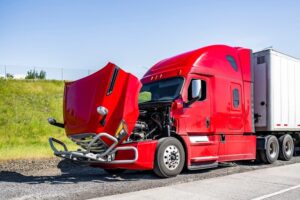
Commercial carriers operating on interstate routes are subject to periodic inspections and compliance reviews administered through the FMCSA.
A carrier's inspection history is publicly available through the FMCSA's Safety Measurement System, including safety ratings, violation records, and out-of-service orders, which are findings that bar a truck or driver from operating until a defect is corrected.
We pull the carrier's FMCSA safety record as one of the first steps in the investigation, because a documented pattern of prior violations is relevant to whether the carrier had notice of a safety problem before the accident.
A carrier with a history of hours of service violations or maintenance deficiencies opens two additional arguments: negligent entrustment, meaning it put a driver or a vehicle on the road it should have known was unsafe, and negligent maintenance of the vehicle itself.
What to Do After a Truck Accident on the Staten Island Expressway
Get the truck's USDOT number before it leaves the scene. That number identifies the motor carrier, which is frequently a different company from the name painted on the cab. Photograph the plate, the trailer, and the position of both vehicles, and get the police report number.
Do not agree to a recorded statement with the carrier's insurer, and do not sign a medical authorization before an attorney has reviewed it. Contact a Staten Island personal injury attorney within days rather than weeks, because logging device and dispatch records run on retention schedules measured in weeks, not years.
FAQs: Staten Island Expressway Truck Accident
If you were injured in a commercial truck accident on the Staten Island Expressway, the questions below address what commuters and other drivers most commonly ask. We welcome the opportunity to discuss your specific situation at no cost.
Does it matter that the SIE is a state highway rather than a city street?
It can affect who else may be a defendant. Where road design, signage, or maintenance contributed to the crash, a claim against a state or municipal authority may be available, and those claims carry far shorter deadlines than a claim against a carrier. We evaluate that early because the notice periods are unforgiving.
How long do I have to file a claim after an SIE truck accident?
The statute of limitations, which is the legal deadline to file suit, is three years from the date of injury for most New York personal injury claims, under New York Civil Practice Law and Rules Section 214. . The electronic evidence that matters most has to be preserved far sooner than that, so retaining an attorney promptly protects both the deadline and the evidence needed for a personal injury lawsuit.
Can I bring a SIE truck accident claim if the truck was from out of state?
Yes. A carrier operating on New York roads is subject to New York law for an accident that happens here, whatever state the truck is registered in, and federal motor carrier regulations apply across state lines. We handle SIE claims involving carriers from across the country.
What if I were partly at fault for the SIE truck accident?
New York follows a pure comparative fault system, meaning your recovery is reduced by your percentage of fault but not eliminated. Even if you contributed to the accident through your own driving, the commercial carrier's share of responsibility remains compensable. We analyze the specific facts of each case to determine which liability arguments the record supports.
What if the truck driver were an owner-operator rather than a company employee?
Owner-operator arrangements do not remove the carrier from the case. The carrier that dispatched the load, the entity whose operating authority the truck ran under, and the vehicle's owner may each carry liability and separate coverage. We pull the lease and the federal registration before naming parties.
What damages are available in a Staten Island commercial vehicle insurance claim?
Damages can include past and future medical expenses, lost wages in a personal injury case, loss of earning capacity, pain and suffering, and, in cases involving permanent disability, the projected lifetime cost of future care. Life care planners and vocational analysts document the forward-looking damages that initial settlement offers rarely reflect.
Can I bring a claim if I was a passenger in someone else's car?
Yes. A passenger has the same right to pursue the trucking company, the vehicle owner, and any other liable party. You may also have a claim against the driver of the car you were in, and pursuing one does not waive the other.
The SIE Is Not Just a Road. For Some People, It Is Where Everything Changed.
A commercial truck accident on the Staten Island Expressway rarely has a single cause.

It may trace to driver fatigue, to a maintenance defect that went uncorrected, or to a load secured by a company whose name never appears on the incident report. Finding those facts and connecting them to the right defendant is the work of the case.
At The Perecman Firm PLLC, we represent people injured in commercial truck accidents across Staten Island, New York City, and Long Island. We know how to investigate SIE truck accident cases, how to preserve the electronic evidence that matters most, and how to build a claim that reaches every responsible party.
Our Staten Island injury team handles these cases from our New York City office, and we welcome the chance to discuss the specific circumstances of your accident. To speak with a Staten Island commercial vehicle accident attorney, contact us online or call (212) 977-7033 for a free consultation.