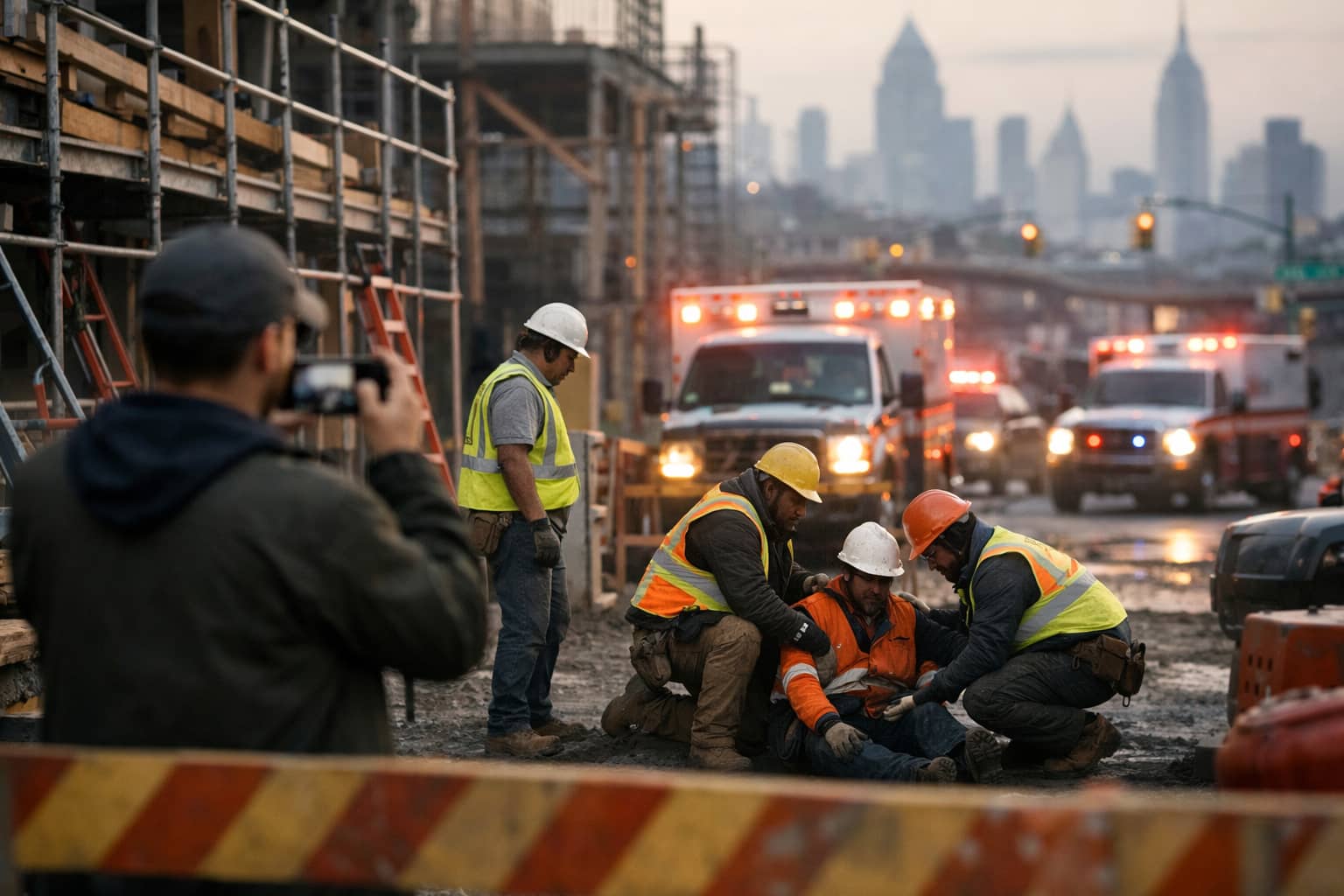
Construction sites dot every corner of New York City, from Manhattan high-rises to Queens renovation projects to Long Island commercial developments. When you witness a worker fall from scaffolding, get struck by falling debris, or suffer any serious injury, your immediate actions can affect the injured person's safety, medical care, and future legal claim.
At The Perecman Firm, we've represented construction accident victims for over 40 years, and witness testimony has made the difference between winning and losing countless cases. Your observations as an independent third party carry enormous weight because you have no personal stake in the outcome. Knowing what to do in those critical moments after witnessing an accident protects the injured worker and preserves crucial evidence. If someone you saw get hurt needs legal help, consider encouraging them to reach out to a lawyer for guidance.
Key Takeaways: Witnessing Construction Accidents in New York City
- Call 911 immediately if the injured worker needs emergency medical attention or if the scene remains dangerous.
- Your detailed account of what you witnessed provides key evidence for the worker's legal claim.
- Photograph and video the accident scene, equipment involved, and any safety violations as soon as it's safe to do so.
- Exchange contact information with the injured worker or their family so they can reach you as they build their case.
- Write down everything you remember about the accident while the details are fresh in your memory.
- Never exaggerate or embellish what you saw, as honest testimony is far more valuable than dramatic stories.
- Call a construction accident attorney if you witnessed a serious accident and want to help the injured worker pursue justice.
Prioritize Safety and Emergency Response
The moments immediately after witnessing a construction accident require calm and quick judgment. Your priority is safety, both for yourself and for anyone injured or nearby.
If the worker appears seriously hurt, call 911 immediately and clearly describe the location, including the address, cross streets, and the specific area of the construction site. Share details about the worker’s condition, such as consciousness, breathing, heavy bleeding, or entrapment, so responders can prepare appropriately. If hazards remain, warn others to stay clear, especially around unstable scaffolding, falling objects, exposed wiring, or damaged structures.
Avoid moving the injured worker unless there is an immediate threat like fire or electrocution, as movement can worsen spinal or internal injuries. Provide basic first aid only if trained, such as applying pressure to a bleeding wound, and avoid untrained interventions. Finally, remain at the scene if possible, as witnesses can offer valuable information to emergency personnel and investigators responding to the accident.
Document Everything You Witnessed
Why Immediate Documentation Matters
Memories fade faster than most people expect. Details that feel clear moments after an accident can blur within days, which is why creating a written record as soon as possible helps preserve accuracy. An early account captures observations before outside conversations, stress, or the passage of time alters what you remember.
How to Record What Happened
As soon as it is safe, write a detailed description of the accident. Note where you were standing, what you were doing, and what first drew your attention. Describe the sequence of events in order, including the time, weather, lighting, and overall site conditions. Small details often become important later.
Worker Activity and Safety Conditions
Document what the injured worker was doing immediately before the accident, such as climbing a ladder, working on scaffolding, operating machinery, or carrying materials. Also record whether safety measures were present or absent, including harnesses, guardrails, secured scaffolds, warning signs, and protective equipment. These observations may relate directly to New York Labor Law requirements.
People, Companies, and Statements
Identify everyone involved or nearby, including workers, supervisors, or bystanders, and note names and contact details if available. Record company names shown on signs, vehicles, or equipment, since multiple contractors may share responsibility. Finally, write down statements you overheard after the accident, especially comments about hazards, missing equipment, or prior safety concerns, as they may provide important context later.
Photograph and Video the Scene
Visual evidence captures details that written notes may miss and provides a clear record of accident conditions. Use a smartphone to document the scene quickly and accurately. Photograph the overall area from multiple angles, including streets, buildings, and landmarks, to show context.
Take close-up photos of equipment to show damage, defects, or improper assembly, and document safety violations, such as missing guardrails or unsecured materials. If appropriate, capture the injured worker’s position and injuries with discretion. Include warning signs, company identifiers, and weather conditions to create a complete visual record.
Exchange Contact Information
Providing your contact information is one of the most important things you can do as a witness. Give your name and phone number to the injured worker or, if they are unconscious, to a coworker, supervisor, or family member.
Obtain the worker’s contact details if possible, including name and phone number, so follow-up is possible. Leave your information with emergency responders or police, who include it in official reports. Consider sharing your details with other witnesses and clearly express your willingness to help, ensuring the injured worker’s legal team can reach you when needed.
Speak With Investigating Authorities
Your statement to authorities becomes part of the official record after a serious construction accident. Provide a complete and accurate account, describing only what you personally observed without speculation. Clearly explain your vantage point, noting whether you saw the entire accident or only part of it.
Identify safety violations such as missing guardrails, absent fall protection, or inadequate equipment. Resist pressure from supervisors or company representatives to alter your statement. Ask for copies of the report or the incident numbers to reference later. Remember, your statement may be used in criminal and civil proceedings, helping hold negligent parties accountable.
Understand Your Value as an Independent Witness
Your testimony carries special weight in construction accident cases because you have no connection to the parties involved. Injured workers appear biased, and coworkers or supervisors face pressure or conflicting interests, which can make their statements less credible. As an independent witness, others view your observations as trustworthy and objective.
Details you notice, especially safety violations or actions the injured worker may not recall, are particularly valuable. Your decision to stop, help, document the scene, and make yourself available shows responsibility and credibility. Clear, factual testimony from a neutral observer can fill gaps, confirm hazards, and strengthen the case in ways that interested parties cannot.
Maintain Accurate Records of Your Involvement
Months or years may pass before anyone contacts you to testify, so keeping careful records is essential. Keep copies of photos and videos in multiple locations, including cloud storage, email, and external drives, to prevent loss.
Preserve your written account of what you witnessed, clearly dated to show it was created shortly after the accident, as contemporaneous notes are more credible than memories reconstructed later. Save correspondence with the injured worker, their attorney, or authorities to maintain a timeline.
Add any later recollections with dates, and track expenses related to testimony. Store all documentation in one accessible location, such as a dedicated folder on your computer, cloud storage, or a physical file, so you can provide accurate, reliable information when called on.
What to Expect When You Testify
Construction accident cases that do not settle before trial often rely heavily on witness testimony. Understanding the process can reduce stress when you participate. Depositions typically occur before trial as part of the discovery process, where attorneys for both sides ask questions under oath while a court reporter records everything.
Although less formal than courtroom testimony, depositions carry the same legal weight. Prepare by reviewing your written account, photos, and other records to refresh your memory and ensure your testimony is accurate. During depositions and trials, answer only the questions asked and avoid speculating about details you did not personally observe. It is acceptable to admit if you don’t remember something.
Defense attorneys may challenge your recollection to test consistency, so remain calm, focused, and truthful. Courtroom testimony follows a similar structure under the judge’s supervision. Most cases settle before trial, but your willingness to participate can influence settlements. Some compensation for travel, lost income, or fees may apply, and the injured worker’s attorney can explain what applies in your situation.
Common Mistakes Witnesses Make
Witnesses play a crucial role in construction accident cases, but even well-meaning observers can unintentionally weaken their testimony. Avoiding common mistakes ensures your account supports the injured worker rather than creating doubt.
- Stick to the facts: Avoid exaggerating or embellishing what you saw, because overstatements can undermine your credibility.
- Avoid speculation: Describe only what you personally observed. Do not guess at causes, faults, or equipment defects.
- Document immediately: Take photos, videos, and written notes as soon as possible, while the scene and conditions are unchanged.
- Maintain contact: Provide your information to the injured worker or their attorney to ensure follow-up is possible.
- Keep testimony private: Do not discuss the accident on social media or with unrelated parties.
- Resist pressure: Stand firm against anyone attempting to change your statement, including defense attorneys.
- Consult legal counsel first: Speak with the injured worker’s attorney before communicating with defense lawyers.
The Broader Impact of Witness Participation
Your decision to get involved after witnessing a construction accident affects more than one case; it promotes broader safety improvements. Holding negligent contractors accountable encourages better industry practices, as companies facing significant settlements become more diligent about protecting workers.
OSHA investigations rely on witness statements to identify violations, issue citations, and enforce safety improvements, making sites safer for everyone. Fair compensation for injured workers enables proper medical care and family support during recovery. Your testimony also sets an example, encouraging other witnesses to step forward and strengthen accountability, supporting a culture of safety and responsibility in the construction industry.
Making a Difference With The Perecman Firm
Independent witness testimony has played a key role in some of our largest construction accident recoveries over the past four decades. Multi-million-dollar settlements, including $15.2 million for a scaffolding fall, $12 million for a ladder accident, and $11.8 million for a suspension scaffold collapse, were strengthened by witnesses who provided honest, detailed observations. Clients have praised us for leaving “no stone unturned” in locating and preparing witnesses.
If you witnessed a construction accident in Manhattan, Queens, Long Island, or elsewhere in New York City, your observations can make a difference. Contact The Perecman Firm to learn how you can help or connect an injured worker with attorneys ready to pursue justice.
FAQs: Witnessing Construction Accidents in NYC
Am I required to stay at the scene after witnessing a construction accident?
No legal requirement forces you to remain at the scene, but staying to provide information to emergency responders and exchange contact details with the injured worker is extremely helpful. Your choice to stay can significantly impact their case.
Can I be sued for trying to help an injured construction worker?
New York's Good Samaritan Law protects people who provide emergency assistance in good faith from liability for ordinary negligence. As long as you act to help and not recklessly, the law protects you from lawsuits.
What if the construction company asks me not to talk about what I saw?
You have every right to discuss what you witnessed with authorities, the injured worker's attorney, or anyone else you choose. Construction companies have no authority to silence witnesses or prevent you from telling the truth.
Will I lose money by testifying in a construction accident case?
Most jurisdictions pay witness fees and reimburse travel expenses for testimony. You might also be compensated for lost income if testifying requires missing work. The injured worker's attorney can explain what compensation applies in your situation.
How long after witnessing an accident might I be contacted to testify?
The attorney might request a statement within weeks, or the deposition might not occur for a year or more. Keep your contact information up to date with the legal team to ensure they can reach you.