Who Pays When a Delivery Van Driver Causes a Crash?
A NYC delivery van accident may lead to claims against the driver, the vehicle owner, an employer, a delivery contractor, or another company that controlled the work. The available claims depend on who owned the van, who directed the driver, and why the driver was on the road.
A NYC delivery van accident can look like an ordinary traffic crash until the insurance paperwork starts. The driver may work for a contractor, the van may belong to another company, and the delivery brand on the side may deny responsibility.
That leaves you trying to recover while several businesses point at one another. The key is identifying who controlled the driver, who owned the vehicle, and which insurance policies apply.
If you were injured by a commercial vehicle that is part of a fleet, don’t try to handle calls from the insurance adjusters alone. Take control of your case with an experienced New York City truck accident lawyer with the Perecman Firm.
Key Points New Yorkers Should Know After a Delivery Van Crash
- A delivery driver, employer, contractor, vehicle owner, or delivery company may all share responsibility for your crash.
- The May 2026 changes to New York’s comparative-fault rules can make it more challenging for some victims to recover compensation.
- Most New York personal injury lawsuits must be filed within three years, but shorter deadlines may apply.
- Delivery companies may hold route data, scans, dashcam footage, and driver records that can help show what happened.
- A commercial vehicle claim may involve more insurance coverage than an ordinary car accident claim.
Who May Be Responsible After a NYC Delivery Van Accident?
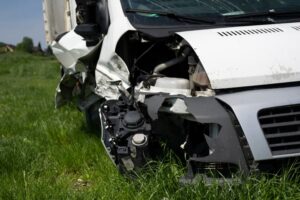
A NYC delivery van accident may involve more than the person behind the wheel. Responsibility often depends on who hired the driver, controlled the route, owned the van, and benefited from the delivery.
A driver may be liable for speeding, failing to yield, driving distracted, backing without checking, blocking a bike lane, or opening a door into traffic. New York Vehicle and Traffic Law § 388 may also make the vehicle owner responsible if someone drove the vehicle with permission.
When the driver is an employee
A company may be responsible when its employee causes a crash while making deliveries or performing assigned work. Schedules, dispatch messages, route instructions, and payroll files may show whether the driver was acting for the company. These records may also help identify the causes of truck accidents, such as unrealistic delivery schedules, inadequate supervision, or company policies that contributed to the collision.
That can matter in crashes involving UPS, FedEx, DHL, grocery fleets, plumbing vans, utility vehicles, and other work vehicles. If you were injured in a commercial fleet vehicle accident in New York, a personal injury lawyer can investigate the driver’s employer and the businesses that controlled the delivery.
When the driver is called an independent contractor
A delivery company may still share responsibility for your crash even if it classifies the driver as an independent contractor. The key question is how much control the company had over the driver’s routes, deadlines, app use, delivery instructions, and performance.
This issue often comes up in crashes involving Amazon Flex, DoorDash, Instacart, and similar services. If you were injured in an Amazon delivery driver accident in NYC, a qualified lawyer may review contracts, app records, route data, and company policies to determine which businesses may be responsible.
When the vehicle belongs to another company
The registered owner, leasing company, rental company, maintenance provider, or contractor may also enter the case. Poor brakes, worn tires, or a defective backup camera can shift part of the focus away from the driver.
A NYC delivery truck & commercial vehicle accident lawyer can investigate the driver, vehicle owner, delivery company, and available insurance together when handling commercial truck accidents in New York City.
Why Are Delivery Crashes So Common on New York City Streets?
Nearly 90% of goods move into New York City by truck, according to the NYC Department of Transportation, and home-delivery demand has added more vehicles to our already crowded highways and streets. This growth creates added traffic and safety risks, prompting city officials to look for alternative ways of moving freight into and around the city.
Dense neighborhoods leave little room for error
A driver unfamiliar with the area may struggle with one-way streets, bus lanes, bike lanes, double-parked vehicles, and sudden pedestrian crossings.
Common pressure points include Midtown loading zones, Canal Street, Atlantic Avenue, Flatbush Avenue, Queens Boulevard, Fordham Road, and commercial corridors in Sunset Park, Jackson Heights, Harlem, and the Lower East Side.
Highways feed delivery traffic into local streets
Delivery fleets often travel between warehouses and neighborhoods using the Brooklyn-Queens Expressway, Cross Bronx Expressway, Long Island Expressway, Major Deegan Expressway, and Staten Island Expressway.
New York City’s 1,000-mile truck-route network connects those highways to industrial areas, loading zones, and neighborhood streets. That means large commercial vehicles often leave fast-moving roads and enter places with tight turns, bike lanes, double-parked cars, busy crosswalks, and limited visibility.
These transitions can be especially dangerous near warehouse hubs in Maspeth, Hunts Point, East New York, Red Hook, and Sunset Park. A driver who is unfamiliar with the route or under delivery pressure may have little room to correct a mistake.
When a crash involves a semi-truck or 18-wheeler, a New York City tractor trailer accident lawyer may need to examine electronic logging data, cargo records, federal trucking rules, and the carrier’s safety history.
Warehouses concentrate truck traffic
The risk of accidents involving commercial trucks and delivery vans is especially evident near large last-mile warehouses – facilities for sorting and dispatching packages to more than 2.5 million NYC addresses per day. A recent New York City Comptroller report found that injury crashes increased near many new facilities, including sites in Maspeth and East New York.
Large last-mile warehouses send delivery vehicles through nearby residential blocks, school zones, bike routes, and crowded intersections throughout the day.
Within a half-mile of these warehouses, truck-related crashes involving injuries rose by 137%. The effects were especially noticeable in parts of Maspeth, where crashes near major FedEx and Amazon facilities have increased dramatically in recent years.
Similar concerns affect East New York, Hunts Point, Red Hook, Sunset Park, and the Newtown Creek area, where commercial traffic mixes with pedestrians, cyclists, buses, and families traveling on local streets.
The New York Police Department tracks collisions by borough, intersection, highway, bridge, and tunnel. That data can help show whether a crash happened in an area already experiencing heavy commercial traffic or repeated safety problems.
Injured by a NYC Delivery Driver? | Call The Perecman Firm | 250 W. 57th Street, Suite 401, New York, NY 10107 | (212) 977-7033 | Free Consultation
What Evidence Can Show Who Caused the Crash?
Commercial delivery cases often produce more evidence than a typical two-car crash. The challenge is preserving it before a company overwrites, deletes, repairs, or discards it.
Useful evidence may include:
- Driver app data, GPS history, route logs, and delivery scans
- Dashcam, surveillance, and vehicle-camera footage
- Dispatch messages and delivery deadlines
- Driver training, safety, and disciplinary records
- Vehicle inspection and maintenance records
- Insurance policies, contracts, and lease agreements
- Police records and witness statements
For example, this evidence may show whether a New York City FedEx truck accident occurred because the driver was rushing, distracted, poorly trained, or working under unsafe delivery demands. These issues often highlight the importance of truck driver safety awareness in preventing serious commercial vehicle crashes. A lawyer can also examine whether FedEx, a contractor, or another company employed and supervised the driver.
How Do New York Insurance Rules Affect Your Claim?
New York’s no-fault system generally pays certain medical expenses and lost earnings without first deciding who caused the crash. A separate claim against the responsible party may seek losses not covered by no-fault benefits.
For pain and suffering, many people injured in motor vehicle crashes must meet New York’s “serious injury” requirement. New York Insurance Law § 5104 explains when a covered person may pursue non-economic damages.
Commercial policies may carry higher limits than personal auto policies, but coverage depends on the vehicle, owner, employer, contracts, and policies. An insurer may dispute who employed the driver, whether the driver was working, or which policy applies.
How Did New York’s Comparative-Fault Rule Change?
New York changed its comparative-fault rule for many motor vehicle injury cases on May 29, 2026. The change can now bar recovery when an injured person is found more at fault than the defendant or all defendants combined.
Before that change, New York generally allowed recovery even when the injured person carried most of the blame. The compensation was reduced by that person’s share of fault.
The current text of Civil Practice Law and Rules § 1411 keeps that general rule but adds a different standard for personal injury cases covered by New York’s no-fault law.
For example, if a jury places 40% of the fault on you and 60% on the delivery driver and company, your damages may be reduced by 40%. If your share exceeds the combined fault of the defendants, the new rule may prevent recovery.
That makes evidence about speed, signals, right of way, bike-lane use, visibility, and driver distraction even more important. Your lawyer may use video, route data, and witness accounts to challenge an unfair attempt to shift blame onto you.
How Long Do You Have to File a Delivery Van Accident Lawsuit?
Most New York personal injury lawsuits must be filed within three years of the crash under Civil Practice Law and Rules § 214.
Not every deadline is three years. Claims involving New York City, a public authority, the United States Postal Service, or another government body may require much earlier notice. Insurance and no-fault deadlines may also arrive long before the lawsuit deadline.
What Should You Protect After the Crash?
You do not need to investigate a delivery company yourself. You can protect what is already in your hands while a lawyer handles formal evidence requests.
Consider keeping:
- Medical bills, wage records, receipts, and benefit notices
- Photos, videos, messages, and contact details already collected
- Delivery-company letters, insurer emails, and claim numbers
- The clothing, bicycle, helmet, phone, or damaged property involved
- A simple record of missed work and daily limitations
Avoid signing a broad release or giving a recorded statement before learning what it may affect. A lawyer can notify the delivery company and insurers to preserve route data, video, driver files, and vehicle records.
NYC Delivery Van Accident Questions Answered by New York Attorneys
Can I sue Amazon if an Amazon Flex driver hit me?
Possibly. Amazon may argue that the Flex driver was an independent contractor, but the answer depends on control, vehicle ownership, insurance, and the details of the delivery. A lawyer can investigate the driver, Amazon’s role, and any other company involved.
What if the delivery van was double-parked when I was injured?
Double-parking may support a claim if it blocked visibility, forced you into traffic, or created another unsafe condition. Video, photographs, witness statements, and vehicle-location data may help show how the van contributed to the crash.
Can a pedestrian or cyclist use no-fault benefits?
Generally, yes, a pedestrian or cyclist struck by a motor vehicle may qualify for no-fault benefits through the vehicle’s insurer. Different rules may apply when the vehicle is unidentified or uninsured.
Can more than one company be responsible?
Yes, the driver’s employer, a contractor, the vehicle owner, a leasing company, or the delivery brand may share responsibility for a single collision. Contracts and control records often show how the businesses divided the work.
What if the driver left before I got the company name?
You may still have options. Police records, nearby cameras, witness accounts, package scans, and vehicle markings may help identify the van and delivery company.
Will the delivery company’s insurer contact me?
It may. The insurer may ask for a statement or authorization soon after the crash. You can speak with a lawyer before deciding what information to provide.
Protect Your Claim Before Evidence Disappears

Delivery companies may hold records that explain where the driver was going, how fast the route was moving, and who controlled the work. Those records can be lost if no one acts to preserve them.
The Perecman Firm offers free case reviews for people injured in New York commercial vehicle crashes. Call (212) 977-7033 or contact The Perecman Firm online. No attorney’s fee is owed unless compensation is recovered.
