Who Is Legally Responsible for a Dog Bite Injury on a Residential Property in Long Island?
The dog's owner is legally responsible for a bite injury on residential property. New York law makes the owner strictly liable for your medical costs, even if the dog never showed aggression before.
For damages beyond medical bills, like pain and suffering and lost wages, you may file a claim based on the owner's knowledge of the dog's aggressive tendencies or the owner's careless behavior. Property owners and landlords may also be liable depending on the circumstances.
Over 40 Years of Experience | Neary $1 Billion Won for Clients | Free Consultation
If you were among the 1,000 people treated every day in U.S. emergency rooms for a dog bite injury, you already know how disruptive and traumatizing an attack is. You may also be wondering what you can do to regain control of your life when pain, medical bills, missed work, and financial strain are now the things that make up your day.
Determining liability for dog bite injuries on residential Long Island properties quickly becomes the most pressing issue, especially when the attack happened at a home where you expected to be safe.
Working with a Long Island dog bite attorney can help you understand who may be responsible and what your claim is truly worth. When multiple parties may share liability, a clear legal strategy helps protect your rights and position your case for full compensation.
Key Takeaways for Dog Bite Liability in Long Island
- New York law provides two paths to recover compensation: strict liability for medical costs if the dog was declared dangerous, or a claim for full damages if the owner knew of the dog's aggressive tendencies or was negligent.
- For damages beyond medical bills, such as pain and suffering, you typically need to show the owner knew about the dog's aggressive tendencies.
- The 2025 Flanders v. Goodfellow decision restored negligence claims, so you may recover compensation even if the dog never bit anyone before.
- Homeowner's insurance in New York typically covers dog bite liability between $100,000 and $300,000, according to the Insurance Information Institute.
How Does New York Law Handle Dog Bite Claims on Long Island?
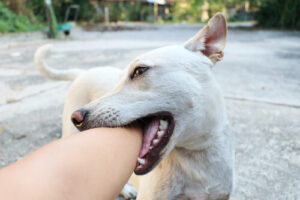
Despite its name, New York's one bite rule does not give every dog owner a free pass for a first attack. It asks whether the owner knew or should have known the dog had "vicious propensities," a legal term for behavior suggesting the dog could be dangerous.
What Counts as a Vicious Propensity in New York?
A vicious propensity goes well beyond a prior bite. Growling, lunging at strangers, snarling through fences, and slamming against windows all qualify. For instance, if your neighbor's dog in Massapequa has been charging at joggers for months, that pattern may be enough.
How Do You Prove the Owner Knew?
Evidence of prior complaints to Nassau County or Suffolk County animal control can help. Testimony from mail carriers, neighbors, or dog walkers who witnessed aggressive behavior is also valuable. Your attorney gathers this evidence so you can focus on healing.
What If the Dog Had No Prior History of Aggression?
Before 2025, this was a dead end for many victims. Recovering anything beyond basic medical costs was extremely difficult. The Flanders v. Goodfellow decision changed that.
How Did Flanders v. Goodfellow Change Dog Bite Law in New York?
On April 17, 2025, the New York Court of Appeals issued a unanimous decision that reshaped dog bite law statewide. The court overturned a nearly two-decade-old precedent that had blocked negligence claims against dog owners.
Rebecca Flanders, a postal carrier, was attacked by a 70-pound dog while delivering a package. The dog had no documented bite history, but fellow carriers had witnessed aggressive behavior during deliveries. The Court of Appeals reinstated her claims on both strict liability and negligence grounds.
The ruling created two distinct paths for Long Island dog bite victims:
- Strict liability still applies when the owner knew or should have known about the dog's dangerous tendencies, or when a dog carries a formal dangerous designation.
- Negligence is now a separate claim. If the owner failed to act reasonably, such as leaving a gate open or ignoring leash laws, the victim may recover full damages even without proof of prior aggression.
This dual framework gives victims a significantly stronger footing, especially for first-time attacks in residential communities like Babylon, Smithtown, or Garden City.
What Damages Can You Recover for a Dog Bite Injury in Long Island?
New York had the highest average cost per dog bite claim in the nation in one recent year at $110,488, according to data from the Insurance Information Institute and State Farm. The table below shows what you may recover depending on the legal theory.
| Legal Theory | What It Covers | What You Must Show |
|---|---|---|
| Strict liability (dangerous dog) | Medical and veterinary costs | Dog was previously declared dangerous under AG & Markets Law Section 123 |
| Strict liability (one bite rule) | Full damages: pain and suffering, lost wages, emotional distress | Owner knew or should have known about the dog's aggressive tendencies |
| Negligence (Flanders standard) | Full damages: pain and suffering, lost wages, emotional distress | Owner failed to exercise reasonable care in controlling the dog |
Recoverable damages in Long Island dog bite cases commonly include:
- Emergency care and follow-up treatment at facilities like Stony Brook University Hospital, North Shore University Hospital in Manhasset, or Good Samaritan Hospital in West Islip
- Reconstructive or plastic surgery for scarring, particularly facial injuries
- Lost wages and reduced earning capacity during recovery
- Emotional distress, anxiety, and post-traumatic stress, especially in children
Every case carries its own set of facts. An New York City dog bite attorney who handles these claims across Nassau and Suffolk counties can calculate the full scope of your losses.
Can a Homeowner or Landlord Be Liable for a Dog Bite on Long Island?
Liability for a dog bite on Long Island residential property can extend beyond the dog’s owner. New York law allows claims against homeowners, landlords, and others who had control over the premises or knowledge of the dog’s behavior. A Long Island personal injury lawyer can investigate who had responsibility for the property and determine which parties may be liable for the victim’s injuries.
Homeowner Liability for Dog Bites on Residential Property
When the dog owner and the homeowner are the same person, liability is straightforward. The homeowner's insurance policy typically provides coverage for dog bite injuries sustained by guests, delivery workers, and other lawful visitors.
Landlord Liability for a Tenant's Dog in Nassau or Suffolk County
A landlord may share responsibility if they knew the dog was dangerous and had the authority to remove it but failed to act. This comes up frequently in apartment complexes across Hempstead, Brentwood, and Bay Shore.
Third-Party Liability in Dog Attack Cases
Dog sitters, pet walkers, and friends watching a dog temporarily may also face liability. If a pet sitter in Commack, for instance, failed to leash a known aggressive dog and the dog attacked a passerby, the sitter could be held responsible. These multi-party situations often require thorough investigation.
Property owners, landlords, and third parties all play a role in residential dog bite cases. An attorney experienced in New York premises liability law can sort out which parties are legally and financially responsible.
What Defenses Do Insurance Companies Raise in Long Island Dog Bite Cases?
Insurance companies look for ways to reduce their financial responsibility. When suing for dog bite injuries in Nassau County or Suffolk County, you may face several common defenses:
- Provocation: If the victim teased or deliberately agitated the dog, the owner may argue the bite was provoked. New York Agriculture and Markets Law Section 123 sets a high bar for this defense.
- Trespassing: Property owners generally owe less duty to unauthorized visitors. But postal carriers, delivery drivers, and utility workers are not considered trespassers.
- Comparative negligence: New York follows a pure comparative negligence system. Even if you were partially at fault, your compensation is reduced by your percentage of responsibility rather than eliminated.
An experienced attorney recognizes these tactics and counters them with the evidence needed to protect your claim.
How Do Local Leash Laws Affect Dog Bite Claims Across Long Island?

Local leash ordinances play a key role in dog bite negligence cases. If the owner violated a leash law when the bite occurred, that violation serves as strong evidence of careless behavior.
Nassau County towns, including North Hempstead, Oyster Bay, and Hempstead, all require dogs to be leashed in public. Suffolk County enforces similar animal restraint ordinances, and the Suffolk County SPCA works with local police to enforce animal control laws.
A leash law violation does not automatically prove liability, but it shows the owner was not acting with reasonable care. Combined with evidence of the bite, this strengthens a negligence claim considerably.
Ask Our Long Island Dog Bite Attorneys About Your Injury Claim
Q: Is a dog owner responsible if their dog bit me but never bit anyone before?
A: Yes, you may still have a valid claim. The 2025 Flanders decision allows victims to pursue negligence claims even when the dog has no history of aggression. If the owner failed to use reasonable care, such as leaving a door open or failing to comply with leash requirements, you may recover damages.
Q: Does homeowner's insurance cover dog bite injuries on Long Island?
A: Most homeowner's and renter's policies in New York include liability coverage for dog bites, typically ranging from $100,000 to $300,000. Some policies exclude certain breeds or dogs with a general history of biting. If the claim exceeds the policy limits, the dog owner is personally responsible for damages above those limits.
Q: How long do I have to file a dog bite lawsuit in New York?
A: New York gives you three years from the date of the bite to file a personal injury lawsuit, as set by CPLR Section 214. Government entity claims may require a notice of claim within 90 days. For children, the deadline may be extended. Acting quickly preserves evidence and strengthens your case.
Dog Bite Liability Questions Answered by Our Long Island Attorneys
Can I sue for a dog bite that happened at a barbecue or house party?
Guests who are lawfully invited onto residential property have a right to reasonable safety. If the host knew the dog had aggressive tendencies or failed to restrain it during a gathering, the host may face both strict liability and negligence claims.
Do doctors have to report dog bites in New York?
Yes. In New York, doctors and other medical providers are generally required to report dog bites to the local health department. This report helps officials assess rabies risk and may trigger an investigation by animal control.
The report can also create an official record of the incident, which may become important evidence if you decide to pursue a claim. Seeking medical attention not only protects your health, but also helps document what happened and when the injury occurred.
What role does animal control play in Nassau or Suffolk County dog bite cases?
An animal control report creates an official record and may trigger a dangerous dog hearing. If a judge declares the dog dangerous, the owner faces strict liability for all future medical costs. These records also help your attorney prove the owner knew about the dog's behavior. They may also support claims for lost wages in personal injury case situations when the victim's injuries prevent them from working.
Are certain dog breeds treated differently in New York?
New York does not have breed-specific legislation. No breed is automatically classified as dangerous. The legal analysis focuses on the individual dog's behavior and the owner's actions, not the breed.
What compensation is available if my child was bitten by a dog?
Children often sustain more severe injuries, including facial scarring that may require years of reconstructive surgery. The statute of limitations is paused during childhood, giving the child until age 21 to file.
Children under seven generally cannot be found to have provoked a dog, removing a common defense. The New York State Department of Health recommends reporting all animal bites for rabies assessment, which also creates valuable evidence.
When a Dog Bite Turns Your Family's Life Upside Down
Over 40 Years of Experience | Neary $1 Billion Recovered for Clients | Free Consultation
If you’re not sure what to do after a dog bite, you’re not alone. These cases can get complicated fast, especially when more than one party may be responsible. Recent changes in New York law have opened the door for many dog bite victims who previously had limited options.

The Perecman Firm is deeply familiar with the nuances of Long Island dog bite claims, from tracking vicious propensities through Nassau and Suffolk County animal control records to strategically negotiating complex homeowner's insurance claims.
If you’re unsure how these changes may apply to your situation, a Long Island dog bite attorney with The Perecman Firm can evaluate your case under this updated legal framework, identify who may be responsible, and explain what your next step should be. This conversation can give you the clarity you need to move forward with confidence.
Call our Long Island office at (516) 268-0130 or contact us online for a free consultation. There is no fee unless we win.