A crane accident on a NYC construction site may support several legal claims, depending on the injured person’s role and what caused the incident. Workers may have workers’ compensation benefits, a third-party injury claim, or both. Bystanders may pursue personal injury claims against any parties whose negligence caused the accident.
Crane and machinery cases rarely turn on one simple question. Lawyers may need to examine worksite control, equipment ownership, lifting plans, inspections, training, rigging, ground conditions, load limits, and compliance with city and federal safety rules.
A crane accident on a NYC construction site can injure workers far beyond the immediate lifting area. A failed boom, dropped load, unstable forklift, or collapsing rig can also endanger pedestrians, motorists, and people inside neighboring buildings.
These incidents often involve multiple companies, technical safety rules, and evidence that may change or disappear quickly. A NYC construction accident lawyer with the Perecman Firm can review the circumstances and explain your options. Call (212) 977-7033 or contact us online for a free case review.
Key Takeaways: Know Your Rights After a NYC Construction Site Accident
- Crane and heavy-equipment accidents may involve property owners, general contractors, operators, subcontractors, rental companies, and manufacturers.
- New York Labor Law § 240(1) may apply when inadequate safety equipment exposes a covered worker to an elevation-related risk.
- New York Labor Law § 241(6) may support a claim when a specific Industrial Code violation contributes to a construction injury.
- Workers’ compensation does not necessarily prevent an injured worker from pursuing a claim against a responsible third party.
- Bystanders may have negligence or product-liability claims even though worker-specific Labor Law protections may not apply to them.
What Types of Crane and Heavy-Equipment Accidents Occur in New York City?

Construction equipment can fail through mechanical defects, unsafe operation, poor planning, unstable support, or mistakes made during assembly and dismantling. The accident mechanism often helps identify which companies and safety failures require investigation.
Crane collapses and boom failures
A crane collapse can injure workers and others across a large area if the boom, jib, counterweights, or suspended load extends beyond the construction fence. Failures may arise during operation, assembly, dismantling, or attempts to secure equipment during severe weather.
The New York City Department of Buildings regulates the permitting, inspection, installation, operation, and use of cranes and derricks. Its rules work alongside the city's Building Code and other safety requirements.
Dropped loads and rigging failures
A suspended load may fall when slings, hooks, cables, shackles, or attachment points fail. Accidents can also occur when a load is unbalanced, improperly secured, or moved without clear communication between the operator and signal personnel.
These incidents may involve the crane company, rigging contractor, general contractor, equipment supplier, or another company responsible for the lifting operation.
Forklifts, telehandlers, and material-moving equipment
A forklift accident at a New York construction site may involve a rollover, collision, falling load, or a worker pinned against a wall or vehicle. Telehandlers create additional risks because they lift materials at greater heights and distances.
A legal investigation may examine operator qualifications, equipment condition, attachments, site traffic, load capacity, ground stability, and whether contractors coordinated the work safely. Part of that review may include determining whether the crane operator qualification rule was followed and whether any violations contributed to the accident.
Excavators, backhoes, and loaders
Excavators and loaders can strike workers inside the machine’s swing radius or crush someone between equipment and a fixed object. They may also contribute to trench collapses, utility strikes, and unstable soil conditions.
A heavy equipment accident involving a construction worker in NYC may therefore involve questions about the operation of the equipment and broader failures in jobsite planning or supervision.
NYC Construction and Heavy Equipment Failures At a Glance
| Accident type | Possible contributing problems | People placed at risk |
|---|---|---|
| Crane collapse or boom failure | Structural failure, unstable setup, excessive loading, wind, assembly errors | Operators, ground crews, pedestrians, nearby occupants |
| Rigging or hoisting failure | Defective slings, unsecured loads, poor signaling, improper attachment | Workers beneath loads and people outside the construction site |
| Forklift or telehandler accident | Tip-over, blind spots, unstable loads, unsafe routes, equipment defects | Operators, laborers, delivery workers, visitors |
| Excavator or backhoe accident | Swing-radius strikes, trench-edge instability, poor visibility | Ground workers, utility crews, flaggers |
| Material-handling accident | Falling materials, crushed loads, failed pallets, unsafe stacking | Workers and members of the public |
Who May Be Responsible for a Crane Accident on a NYC Construction Site?
Several parties may share responsibility for a construction equipment accident. Liability depends on their duties, control over the work, involvement with the equipment, and connection to the safety failure.
Property owners and general contractors
Property owners and general contractors may face liability under New York’s construction laws even when they did not personally operate the crane. Their legal responsibility depends on the statute involved, the work being performed, and the accident mechanism.
Under New York Labor Law § 240(1), certain owners, contractors, and agents must provide proper protection against covered elevation-related hazards. The law includes devices such as hoists, slings, blocks, pulleys, ropes, scaffolds, and ladders.
Crane operators and equipment contractors
A crane operator or equipment contractor may be responsible when unsafe operation contributes to the accident. Relevant issues may include load control, signaling, weather conditions, site restrictions, equipment setup, and compliance with an approved lifting plan. These factors often overlap with the causes of crane operator injuries, helping determine who may be legally responsible for the accident.
Operator error does not necessarily end the inquiry. The operator’s employer, the company directing the lift, and others controlling the site may also bear responsibility.
Subcontractors and rigging companies
Rigging contractors may be responsible for selecting, inspecting, attaching, or controlling lifting components. Other subcontractors may create unsafe conditions by entering restricted areas, interfering with operations, or failing to coordinate overlapping work.
Contract documents, daily logs, lift plans, meeting records, and witness accounts may help show which companies controlled each part of the operation.
Rental companies, maintenance providers, and manufacturers
A rental company or maintenance contractor could be held liable for supplying unsafe equipment or failing to perform required service. A manufacturer may be responsible when a defective component, design, warning, or safety system contributes to the accident.
A NYC construction equipment injury attorney may work with engineers and other technical professionals to determine whether the incident arose from operation, maintenance, design, or a combination of failures.
Does New York Labor Law § 240 Apply to Crane and Equipment Accidents?
New York Labor Law § 240(1) may apply when a covered worker suffers an injury caused by an elevation-related hazard and proper protective equipment was not provided. The rule does not apply to every crane, forklift, or machinery accident.
Falling workers and failed lifting devices
Section 240(1) may apply when a worker falls from an elevated work area or when a hoist, sling, crane component, or similar device fails to provide proper protection from a gravity-related risk.
New York Labor Law § 240(1) does not apply just because a crane was involved. It may apply when a worker was injured by a height-related risk, such as a falling load, a failed hoist, or inadequate protection while working above ground level.
Falling objects and suspended loads
Labor Law § 240(1) usually applies when gravity creates a significant height-related risk. For example, it may cover a worker injured by a heavy load that falls from an upper floor or drops while being hoisted.
It may not apply when a small object simply tips over or falls a short distance from the same work surface. In that situation, the injury may still support a claim under another New York construction-safety law or a negligence theory.
Labor Law § 241(6) and Industrial Code violations
New York Labor Law § 241(6) may apply when a construction accident was caused by the violation of a specific worksite safety rule. These rules appear in the New York Industrial Code and cover hazards such as unsafe machinery, falling materials, dangerous passageways, and demolition work.
The rule that applies will depend on how the crane or equipment accident happened. A personal injury lawyer can identify the relevant safety requirement and determine whether its violation contributed to the worker’s injury.
Get Answers About Your Construction Accident | The Perecman Firm | 250 W. 57th Street, Suite 401, New York, NY 10107 | (212) 977-7033 | contact us online
Which Crane Safety Rules Apply in New York City?
Crane operations in New York City may be governed by federal standards, state law, the New York City Building Code, and Department of Buildings rules. Each system addresses different parts of construction safety.
OSHA crane and derrick standards
The Occupational Safety and Health Administration (OSHA) regulates power-operated construction equipment that hoists, lowers, and horizontally moves suspended loads. Its crane standards address ground conditions, assembly, inspections, operating procedures, power lines, signaling, training, and operator qualifications.
Possible violations may include:
- Using equipment on inadequate or unstable ground
- Failing to inspect cranes or rigging properly
- Allowing unqualified personnel to operate or signal
- Exceeding rated capacity or ignoring manufacturer limits
- Operating too close to power lines
- Failing to control access around the lifting area
A safety violation may provide important evidence, but it does not automatically establish every element of a civil claim. The connection between the violation and the injury still requires careful analysis.
New York City crane permits and inspections
The Department of Buildings’ Cranes and Derricks Unit oversees equipment used for lifting and hoisting in the city. Covered equipment may require applications, operating certificates, inspections, and permits that must remain available at the site.
Records from the Department of Buildings may help identify the equipment user, permit holder, licensed operator, approved configuration, inspections, violations, and stop-work orders.
What Have Past NYC Crane Collapses Shown?
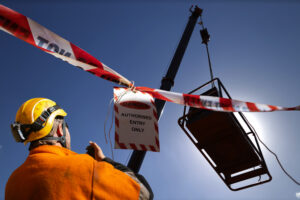
Public investigations show that crane disasters can harm people well outside the immediate jobsite. They also demonstrate why engineering analysis and official records often become central to these claims.
In February 2016, a crawler crane collapsed onto Worth Street in Lower Manhattan. The incident killed one person, injured three pedestrians, damaged nearby buildings, and struck parked vehicles. The Department of Buildings later attributed the collapse to operator errors during efforts to secure the crane.
In July 2023, a fire broke out in the cab of a tower crane in Midtown Manhattan. The fire weakened the crane’s boom, which then collapsed and struck a nearby building. After investigating the accident, New York City adopted additional fire-safety rules for tower cranes.
These incidents are just two examples that show how crane accidents may involve operators, contractors, equipment conditions, emergency planning, city oversight, and risks to the surrounding public. They also highlight the importance of following New York City crane accident recommendations to reduce hazards and improve safety on construction sites.
If your injury happened on a Manhattan project, a Manhattan construction accident lawyer can examine site records, permits, contractors, and other local evidence.
What Happens to a Legal Claim After a Serious Equipment Accident?
A construction equipment claim often begins with preserving evidence and identifying every organization involved. The physical site may change within hours, while equipment can be removed, repaired, tested, or returned to a rental company.
A lawyer may take the following steps:
- Identify owners, contractors, subcontractors, operators, and equipment providers
- Seek preservation of the crane, forklift, rigging, electronic data, and surveillance footage
- Review permits, lift plans, inspections, maintenance logs, contracts, and safety records
- Interview witnesses and consult engineering or construction-safety professionals
- Examine medical consequences, lost income, future care, and reduced earning capacity
- Evaluate workers’ compensation and possible third-party claims without confusing the two
This work can uncover which contractors and companies may share responsibility for the accident. It can also help prevent one company from shifting blame to another before the facts are fully developed.
How Can Injured Construction Workers and Bystanders Protect Their Injury Claim?
Legal guidance after a crane accident should focus on protecting evidence and avoiding unnecessary pressure from insurers or contractors. Injured people should not be expected to conduct a technical construction investigation themselves.
Helpful considerations include:
- Keep copies of medical, wage, union, benefit, and expense records that reach you.
- Avoid signing releases or giving recorded insurer statements before obtaining legal advice.
- Preserve personal photographs, messages, videos, and documents already in your possession.
- Refer questions from insurers, contractors, or equipment companies to your lawyer.
- Tell your lawyer about every government agency, employer, insurer, or company that contacts you.
A New York crane accident lawyer can handle official record requests, site investigation, legal filings, expert review, and communications with opposing parties.
NYC Crane Accident Questions Answered by Our New York Attorneys
Can my employer fire me for bringing a construction accident claim?
Your employer cannot lawfully retaliate against you because you filed, planned to file, or participated in a workers’ compensation claim. However, workers’ compensation law does not guarantee that your position must remain open indefinitely, and an employer may still act for a legitimate reason unrelated to the claim.
If you are worried about losing your job or facing retaliation, consult a lawyer right away. They can explain which protections may apply and how to respond.
Does my union membership change my right to file a claim?
Union membership generally does not eliminate an injured worker’s right to seek workers’ compensation or pursue a valid third-party claim. Collective bargaining benefits, disability plans, liens, and wage records may affect the financial analysis, so they should be reviewed as part of the case.
What if the contractor says the crane operator caused everything?
Operator error may be only one part of the accident. The general contractor, equipment company, rigging contractor, property owner, or maintenance provider may have contributed through poor planning, unsafe supervision, defective equipment, or inadequate site controls.
Can an undocumented construction worker file an injury claim in New York?
Yes, an undocumented construction worker may still have legal rights after a New York jobsite injury. Immigration status does not erase workplace safety protections, although it may affect some aspects of damages or litigation strategy.
Does workers’ compensation prevent a lawsuit after a crane accident?
Not necessarily. Workers’ compensation is generally the exclusive remedy against an injured worker’s employer, but a separate claim may be available against a property owner, general contractor, equipment company, or another responsible third party.
How long do I have to file a NYC crane accident lawsuit?
Most New York personal injury lawsuits must be filed within three years, but some claims have much shorter deadlines. If a city agency or another public entity may be responsible, you may need to serve a notice of claim within 90 days and file the lawsuit within one year and 90 days. Wrongful death and workers’ compensation claims follow different reporting and filing deadlines, so you should have your case reviewed as soon as possible.
Can a family bring a claim after a fatal crane accident?
Yes, the personal representative of the estate may be able to bring a wrongful death claim when negligence or another wrongful act caused the death. Different deadlines and estate procedures apply, so families should receive prompt, careful guidance.
Get Clear Answers About What Happened at the Jobsite

A crane or machinery accident can leave several companies pointing in different directions while an injured worker or family faces immediate consequences. Identifying who is responsible may require reviewing contracts, permits, inspection records, lift plans, maintenance logs, and testimony from workers and safety professionals.
The NYC construction accident attorneys at the Perecman Firm have handled serious construction cases throughout all five boroughs for more than 40 years. We can investigate the worksite, equipment, contractors, and long-term consequences of the injury.
Call (212) 977-7033 or contact us online for a free case review. You pay no attorney’s fees unless we recover compensation for you.