The logo on the van that hit you tells part of the story. The corporate structure behind that logo tells the rest, because in Queens delivery van accident cases, that structure decides who can be named and what insurance is available.
Amazon, UPS, and FedEx each run last-mile delivery differently, and New York law analyzes each model differently. At our Queens injury practice, we handle these cases across the borough, from Queens Boulevard to the residential streets of Flushing and Astoria. Call (212) 977-7033 before accepting any offer from a delivery company's insurer.
Key Takeaways:
- Amazon, UPS, and FedEx each operate under distinct corporate and employment structures that affect who can be held liable when one of their vehicles causes an accident in Queens.
- New York Vehicle and Traffic Law Section 388 imposes liability on the owner of a vehicle for injuries caused by anyone driving it with permission, which turns on who owns the van rather than on how the driver is classified.
- Amazon's use of third-party Delivery Service Partners raises a distinct question about whether Amazon itself can be held responsible for a DSP driver's negligence, which turns on the degree of control Amazon exercises over the delivery.
- Classifying a UPS or FedEx driver as an independent contractor does not automatically shield the parent company, where that company exercises significant control over how deliveries are made.
- Queens delivery van accident cases may involve multiple liable parties, including the driver, the delivery company, the vehicle owner, and the company whose goods were being delivered.
Why Is the Logo on the Van Not the Whole Answer?
How Each Delivery Company Structures Its Queens Operations
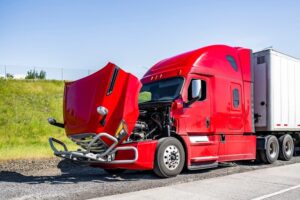
The three major delivery companies operating in Queens use different last-mile models, and the differences matter to an injury claim.
Amazon routes deliveries through Delivery Service Partners, which are independent businesses that hire the drivers and own the vans. UPS uses a combination of direct employees and contracted drivers, depending on the delivery type. FedEx Ground, which handles most residential deliveries, operates largely through contracted owner-operators and service providers.
Under each model, the driver may not be a direct employee of the company on the van. New York law provides several routes to corporate liability anyway, and identifying which route applies means understanding the specific model.
What does New York Vehicle and Traffic Law Section 388 do
New York Vehicle and Traffic Law Section 388 imposes liability on the owner of a vehicle for injuries caused by anyone operating that vehicle with the owner's express or implied permission. This statute is one of the most powerful tools in Queens delivery van accident cases because it reaches the vehicle owner regardless of the employment classification of the driver.
When a Delivery Service Partner owns the van and permits a driver to operate it, Section 388 reaches the DSP as the vehicle owner. Section 388 turns on ownership, not on employment or operational control, so it reaches whichever entity holds title to the vehicle or the right to possess it.
Reaching the contracting company itself is a separate question. That runs on vicarious liability, meaning one party is held responsible for another's negligence because of the relationship between them, together with the control test, rather than Section 388. Those are two distinct routes to a corporate defendant, and a well-built claim pleads whichever ones the ownership records and the contracts actually support.
How Does Amazon Delivery Accident Liability Work in Queens?
What Is a Delivery Service Partner and Why Does It Matter?
Amazon does not directly employ most of the drivers who deliver packages in Queens. Instead, it contracts with Delivery Service Partners, small businesses that hire drivers, lease or purchase the vans, and manage day-to-day delivery operations. Amazon sets the delivery routes, the time windows, the performance metrics, and the operational protocols that DSP drivers follow.
That level of operational control is the center of the liability argument against Amazon in Queens delivery van accident cases. New York applies a control test rather than accepting the classification at face value, and the more specifically a company dictates how, when, and where the work is performed, the stronger the argument that the label does not insulate it.
What Amazon's Operational Control Means for Your Claim
Several features of the Delivery Service Partner model bear on the control question: who assigns the route, who sets the delivery window, whose branding appears on the van, and who monitors driver performance during the shift.
Where the record establishes that the contracting company controls most of those inputs, that supports an argument that it exercises sufficient control over the delivery operation to bear responsibility for what happens during it, each of those points is a documentary question, not an assumption.
We pursue Queens Amazon delivery accident claims by building the operational control argument from the documentary evidence: the DSP agreement, the delivery protocols Amazon imposes on DSP operators, and the performance monitoring data that establishes how closely Amazon supervises the delivery process. That evidence is obtainable through discovery, and it is the foundation of the corporate liability argument.
UPS and FedEx: Independent Contractors and Corporate Liability
How UPS Structures Its Delivery Operations
UPS uses direct employees for many of its delivery operations, which makes the liability analysis more straightforward in those cases. The driver is a UPS employee, UPS is the employer, and respondeat superior, the legal principle that an employer is responsible for their employee's conduct within the scope of employment, applies directly.
Where UPS uses independent contractors or supplemental drivers, the analysis becomes more complex. The key question is the same as in the Amazon context: how much control does UPS exercise over how the contractor performs the delivery? The more specific and comprehensive the control, the stronger the argument that UPS bears liability for the contractor's negligence regardless of the independent contractor classification.
How FedEx Ground's Contractor Model Creates Liability Questions
FedEx Ground routes in Queens are operated almost entirely by independent contractors who own their vehicles and hire their own drivers. That structure creates a stronger nominal distance between FedEx and the driver than the UPS model. However, FedEx Ground's contractor agreements impose detailed operational requirements on how deliveries are performed, what equipment is used, and how drivers present themselves.
Federal Motor Carrier Safety Administration regulations under 49 CFR 390 impose safety obligations on motor carriers that operate commercial vehicles in interstate commerce, including delivery vans operating across state lines. Where FedEx is the motor carrier of record, meaning the company federal regulators hold accountable for the safe operation of those vehicles, that status creates a regulatory connection between FedEx and the driver's conduct, which supports liability arguments beyond the standard contractor analysis.
What Makes Queens Delivery Van Accidents Different?
How Queens Streets Create Specific Delivery Van Accident Patterns
Queens delivery van accidents follow patterns that are specific to the borough's street geography and delivery density. Narrow residential streets in neighborhoods like Jackson Heights and Corona see consistent double-parking by delivery vans, forcing cyclists and drivers into oncoming traffic lanes. Commercial corridors along Northern Boulevard and Jamaica Avenue see high-frequency delivery stops that create sudden stopping and door-opening hazards.
Near JFK Airport and the distribution infrastructure along the Van Wyck Expressway corridor, larger commercial vehicles mix with passenger traffic in ways that produce high-severity accidents. These are not random events; they are predictable consequences of delivery volume and street design.
Those patterns generate documentary evidence: traffic camera footage, dispatch records, and delivery route data. That record is what builds a strong Queens delivery van accident case.
What Evidence Gets Preserved in a Queens Delivery Van Accident Case
Delivery companies maintain extensive electronic records of their drivers' activity: GPS route data, delivery scan timestamps, dispatch communications, and, in some cases, in-cab camera footage. That data establishes exactly where the driver was, how fast they were moving, and what they were doing in the moments before the accident.
Preserving that data requires acting quickly. Delivery companies are not required to retain electronic records indefinitely, and the data that would establish a driver's distraction or route deviation can be overwritten within days of the incident. We send preservation letters to delivery companies as one of the first steps after being retained, specifically targeting the electronic records that are most likely to support the liability argument.
What to Do After a Delivery Van Accident in Queens
Photograph the van's license plate, any DOT number on the body panel, and any company markings before the vehicle leaves the scene. Those numbers identify the registered owner and the motor carrier, which is the information that decides who can be named. Ask the driver which company dispatched them, not just whose logo is on the door.
Report the crash and get the police report number. Do not give a recorded statement to any delivery company's insurer before you have counsel. Contact an Queens personal injury lawyer within days rather than weeks, because the GPS and dispatch records that establish route deviation or speed can be overwritten quickly.
FAQs: Queens Delivery Van Accident Lawyer
If you were injured in a delivery van accident in Queens, the questions below address what injured people most commonly ask. We welcome the opportunity to discuss your specific situation at no cost.
What if the delivery van that hit me had no visible company branding?
Unmarked and rented vans are common in last-mile delivery, and the absence of a logo does not mean there is no company behind the vehicle. The registration, the insurance filing, and any DOT number on the body panel identify the owner and the carrier. We run those searches before deciding which parties to name.
What if the UPS or FedEx driver who hit me was classified as an independent contractor?
Independent contractor classification does not automatically shield the parent company, because New York applies a control test rather than accepting the label. The more specifically a company directs how the contractor performs the work, the stronger the argument that it bears responsibility for that contractor's negligence. We review the contract and the operational protocols before drawing any conclusion about corporate liability.
How long do I have to file a claim after a delivery van accident in Queens?
The statute of limitations, which is the legal deadline to file a personal injury lawsuit, is three years from the date of injury for most New York personal injury claims, under New York Civil Practice Law and Rules Section 214. However, preserving the electronic delivery records that are most valuable to the liability argument requires acting much sooner. Retaining an attorney promptly after a Queens delivery van accident protects both the legal claim and the evidentiary foundation.
What if the delivery driver was making a personal stop when the accident happened?
A driver who deviates from their delivery route for personal reasons may take the accident outside the scope of their employment, which can affect the corporate liability analysis. However, a brief personal detour does not automatically eliminate corporate liability, and the vehicle owner may still be liable under New York Vehicle and Traffic Law Section 388 as long as the driver was operating the van with the owner's permission.
Can delivery drivers injured on the job pursue claims against the delivery company?
Yes, and the options depend on classification. Drivers classified as employees can pursue workers' compensation and, in some cases, a third-party personal injury claim against another party on the road. For delivery drivers injured on the job who were labeled independent contractors, New York's Commercial Goods Transportation Industry Fair Play Act presumes employee status for commercial goods drivers unless the hiring party meets a statutory test, which can change which benefits are available.
What damages are available in a Queens delivery van accident case?
Damages can include past and future medical expenses, lost wages in a personal injury case, loss of earning capacity, pain and suffering, and, in cases involving permanent disability, the projected lifetime cost of future care. For serious injuries, life care planners and vocational analysts document the forward-looking damages that initial settlement offers almost never reflect.
Does it matter which delivery company owned the van if the accident happened in Queens?
Yes, significantly. The corporate structure behind each delivery brand affects who can be named as a defendant, what liability theories apply, and what insurance coverage is available to satisfy the claim. Amazon, UPS, and FedEx each present a different liability picture, and building the right case requires understanding which structure applies to the specific accident.
The Logo on the Van Points to the Company. The Law Gets You There.

A delivery van accident in Queens is not just a claim against the driver. It is also a claim against the companies whose contracts and operating decisions govern how that delivery was made. New York law provides the tools to reach the corporate entity behind the logo, and we know how to use them.
At The Perecman Firm PLLC, we represent people injured by delivery vehicles across Queens, New York City, and Long Island. We know how Amazon, UPS, and FedEx structure their operations, and we know how to build the liability argument that reaches beyond the driver to the company that sent them.
To speak with a Queens commercial vehicle accident attorney about your case, contact us online or call (212) 977-7033 for a free consultation.
